Control real analog gear straight from your DAW with the Analog Matrix. The Analog Matrix is not an emulation! It acts as a portal, connecting your digital audio workstation to actual physical gear in real time.
Reserve a session using the calendar below, or jump straight into the Analog Matrix plugin and use equipment on demand as it is available. Note: on-demand access requires credits or an active subscription.


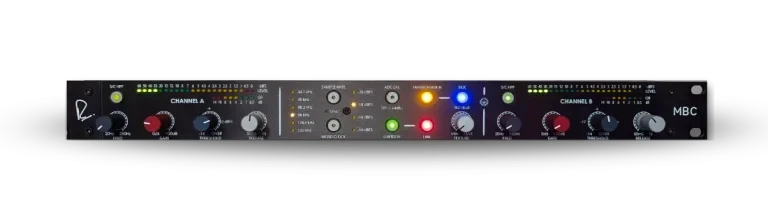
The Rupert Neve Designs Master Bus Converter (MBC) is a top-tier dual-path A-D converter and limiter designed for creating digital signals with exceptional tone, transparency, and power.
It features a unique analog drive circuitry allowing users to switch between a class-A transformerless path for utmost transparency and a transformer-coupled path with variable Silk for tonal enhancements.
The MBC includes mastering-grade 24-bit/192kHz conversion, versatile connectivity options, and precise metering systems, making it an indispensable tool for professional audio production.
For more information: https://rupertneve.com/products/master-bus-converter
Join the ranks of top engineers and producers who swear by the Rupert Neve sound!
What is the Rupert Neve Designs Master Bus Converter?
The Rupert Neve Designs Master Bus Converter (MBC) is a dual-path, two-channel analog-to-digital converter with a built-in analog limiter and Rupert Neve’s signature Silk circuit. Your audio passes through a fully analog front end, a class-A limiter, switchable transformers, and Silk saturation, before reaching a reference-grade 24-bit/192kHz converter. It’s the unit engineers reach for to print real Neve tone and color onto the final A-D step of a track, mix, or master.
What is the MBC best for?
The MBC is best for the final analog-to-digital capture stage – tracking, printing mixes, and mastering – where you want Neve character baked into the signal as it turns digital. It shines on full mixes and 2-bus material, gluing things together with its limiter and adding weight or air with Silk, but it’s just as at home on a drum bus, an acoustic guitar, or a lead vocal. Run the transformerless path when you want pristine clarity, or the transformer path when you want classic Neve color.
Is the Access Analog MBC the real hardware or an emulation?
It’s the actual Rupert Neve Designs Master Bus Converter, the real class-A circuitry, custom transformers, Silk, and limiter, not a software model of them. Real Gear. No Emulations. Through the Analog Matrix plugin you robotically control the physical unit in our racks straight from your DAW, so every knob you turn moves the real hardware.
Is the MBC analog or digital?
Both, and that’s the whole idea. The MBC’s entire signal path is analog: a class-A limiter, switchable interstage transformers, and the Silk saturation circuit all process your audio before any conversion happens. That analog stage then feeds a reference-grade 24-bit/192kHz converter, so you get genuine Neve analog tone printed at the exact moment your signal becomes digital.
What’s the difference between the transformerless and transformer paths on the MBC?
The MBC lets you feed its converter through one of two analog paths at the push of a button. The class-A transformerless path is built for maximum transparency, clean, detailed, and uncolored. The transformer-coupled path runs your signal through custom Rupert Neve interstage transformers and the Silk circuit, adding the weight, dimension, and harmonic richness Neve gear is famous for.
What’s the difference between Red and Blue Silk on the MBC?
Red and Blue Silk are two flavors of harmonic saturation from the MBC’s transformer path. Red Silk emphasizes harmonics in the mid and high frequencies, adding presence and air that can feel like a blanket lifting off the top end. Blue Silk emphasizes the lows for warmth and thickness, and the Texture knob sets exactly how much of either you dial in.
What does the limiter in the MBC do?
The MBC’s Compound Active Release limiter is a fast, musical analog limiter that controls peaks and adds punch before the converter. It runs a fixed 10:1 ratio with a near-instant attack and a variable release, plus a sweepable sidechain high-pass filter (roughly 20–250 Hz) so your low end punches through without triggering the limiter. Use a touch of it to tighten and glue a mix, or push it harder on tracking for control and vibe.
How much does it cost to use the MBC at Access Analog?
You can reserve the Rupert Neve Designs Master Bus Converter at Access Analog from $5.07. Use it on demand with credits or an active subscription. Subscriptions start at $9.98/month, and credits never expire. New accounts get a free hour on real gear, so you can try the MBC before committing.
Can I save and recall my MBC settings at Access Analog?
Yes. The Analog Matrix plugin saves your MBC settings inside your DAW session and recalls them instantly, like any other plugin. Because you’re controlling the physical hardware robotically, every knob position and switch returns exactly where you left it, and you can automate parameters too. That gives you total-recall analog with none of the manual re-patching of a traditional studio.