Control real analog gear straight from your DAW with the Analog Matrix. The Analog Matrix is not an emulation! It acts as a portal, connecting your digital audio workstation to actual physical gear in real time.
Reserve a session using the calendar below, or jump straight into the Analog Matrix plugin and use equipment on demand as it is available. Note: on-demand access requires credits or an active subscription.


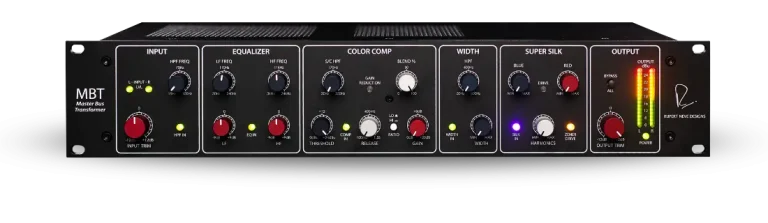
The Rupert Neve Designs MBT (Master Bus Transformer) is a versatile and powerful audio processing unit. It is a stereo audio processor designed to provide tonal shaping and dynamics control for mix buses, stems, or individual tracks. It is designed to sweeten, enhance, drive, widen, and transform audio source material for musical coloration.
It features a versatile EQ with high and low-frequency shelving, a smooth opto-compressor, and the ‘Silk’ harmonic enhancement circuitry Rupert Neve is known for. The MBT aims to offer flexible tone shaping and compression options to help add depth and dimension to mixes.
The MBT has a simple interface with just a few controls per section. The EQ provides up to +/-9dB of boost/cut on the low and high shelves, with a wide frequency range on each band. The compressor offers variable threshold, release, and ratio controls, plus wet/dry parallel compression. The Silk section recreates Rupert Neve’s famous transformer color through harmonic distortion and frequency-focused drive stages.
Some key benefits of the MBT are its rich, musical sound – courtesy of Rupert Neve, the broad tonal shaping options, intuitive interface, and robust +26dBu maximum input/output levels. It’s built to satisfy professionals in commercial studios and passionate hobbyists alike. The MBT brings coveted Rupert Neve tone-shaping to mix buses, subgroups, and tracks in a simple, flexible 1RU form factor.
Whether used in a professional recording studio or a home audio system, the MBT is a valuable tool for anyone looking to improve the sound of their music.
New to the MBT? Read Quick Start Guide – Rupert Neve Designs Master Bus Transformer.
What is the Rupert Neve Designs Master Bus Transformer?
The Rupert Neve Designs Master Bus Transformer (MBT) is an all-analog, two-channel tone-shaping processor built around Rupert Neve’s signature custom transformers. It packs five sections into one box: a high-pass filter and input stage, a two-band shelf EQ, an optical Color Comp compressor, a stereo Width section, and the Super Silk harmonic saturation circuit. It is designed to sweeten, drive, widen, and color full mixes, stems, groups, or individual tracks. At Access Analog you control the real hardware unit straight from your DAW through the Analog Matrix plugin.
What is the MBT best for?
The MBT is best for adding analog weight, color, and dimension to a mix bus or master, but it shines on stems, subgroups, and individual tracks too. Engineers reach for it to warm up sterile in-the-box mixes, glue a bus together with gentle optical compression, widen the stereo image without losing low-end focus, and add harmonic saturation that makes a track feel louder and more expensive. It is equally at home on a drum bus, a vocal group, or a final master.
What is Silk and Super Silk on the MBT?
Super Silk is Rupert Neve Designs’ harmonic saturation circuit, and the MBT is the first RND device to run Silk Red and Silk Blue at the same time. Blue emphasizes low and low-mid harmonics for depth and weight, while Red adds upper-mid and high-frequency harmonics for air and sparkle. A Harmonics control saturates a dedicated pair of interstage transformers, and the switchable Zener Drive adds an asymmetrical soft-clip stage for a more aggressive, punchy tonality as you push the level. Together they deliver the lush, musical “Neve” transformer color in a way no software can fully recreate.
What kind of compressor is in the MBT?
The MBT’s Color Comp is an all-new optical compressor designed to add color and character, not just transparent level control. It offers selectable 2:1 and 5:1 ratios, a variable release, a sweepable sidechain high-pass filter that lets low frequencies pass through uncompressed, and a Blend control for instant parallel compression. The opto cell adds subtle harmonic richness even with very little gain reduction, which makes it ideal for gentle bus glue and taming harsh digital transients.
What does the Width section do?
The Width section widens the stereo image while keeping the low end focused and centered. It uses an additive-only, mid-side-style approach with a variable high-pass filter, so the mids and highs spread out for a bigger, more dimensional soundstage while the bass stays solid in the middle. Subtle high-frequency tapering keeps the widening from sounding harsh. It is a fast way to make a mix sound open and expensive, especially after compression.
How is the MBT different from the Rupert Neve Designs Master Buss Processor (MBP)?
The MBT and MBP are different boxes that complement each other rather than replace one another. The MBP is built around a versatile VCA compressor and limiter aimed at classic bus and mastering dynamics, while the MBT is more of a tone-and-color chain: a shelf EQ, an optical Color Comp, a refined additive Width section, and the simultaneous Red/Blue Super Silk saturation the MBP doesn’t have. Many engineers run both in tandem, using the MBT for character and the MBP for dynamics. If you want one box that screams analog color, the MBT is the tone machine.
Is the MBT at Access Analog the real hardware or an emulation?
It is the real, physical Rupert Neve Designs Master Bus Transformer. Real Gear. No Emulations. The signal path is 100% analog hardware; the only digital part is the robotic control and metering that lets you operate the unit from your DAW. Through the Analog Matrix plugin, your audio streams to the actual MBT in our racks, gets processed by its real transformers and opto cell, and streams back to your session. You are controlling a genuine analog box, not a software model of one.
Can I save and recall my MBT settings at Access Analog?
Yes. Every knob, switch, and selector on the MBT is independently recallable through the Analog Matrix plugin. You can save presets for the MBT alone or as part of a full signal chain and recall them exactly later, with no recall sheets or re-dialing by hand. The MBT processes your DAW audio at line level through the plugin, so you insert it like any other plugin on a track, bus, or master, there is no physical mic or instrument tracking involved.
Rupert Neve Designs MBT Product Page
Sweetwater Video Review
Vintage King Video Review