
Imagine unlocking the soul-stirring warmth and irresistible glue of legendary 1970s analog tape, without ever sourcing a clean reel.
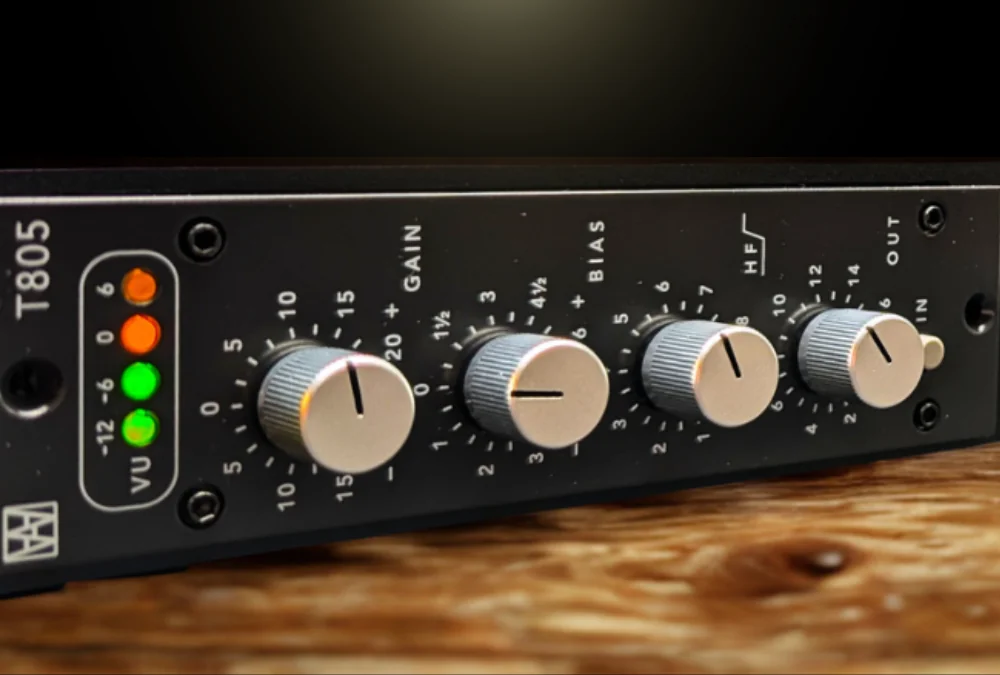
The Walters Audio T805 is an entirely new kind of tape unit. It recreates real tape saturation with an MK80 tape-head design and a patent-pending Tape Element, so you can inject genuine tape magic into a mix without the hassle of finding, aligning, and calibrating a machine. To be clear about what it is: the T805 is a hardware tape-saturation unit that generates tape behavior in a real magnetic element — not a reel-to-reel tape deck. This guide covers what the T805 is, how it actually works, and how to use it, including 16 ready-to-go presets built by Karl Barnes, a partner of Access Analog, and a pro tip for rolling your own.
The T805 puts the sound of a pushed studio tape machine on any bus, and through Access Analog you run the real hardware remotely from your DAW.
The Walters Audio T805 is a tape-saturation unit that produces the sound of recording to analog tape using a real magnetic element instead of a digital model. It incorporates an MK80 tape-head design and a patent-pending Tape Element to deliver a full-spectrum magnetization experience of real tape. The point is simple: pure tape character on demand, without the hassle of finding a clean tape.
You feel it first in the low end. The T805's head bump is a recreation of the low-frequency response bump of an 80s MK80 tape machine, the gentle ripple in a tape machine's response that adds rich, musical bottom-end depth. It is what makes bass and kick drums sit perfectly in the pocket. Crank the unit for aggressive, colorful saturation that turns an ordinary vocal into a star or a bus into a polished master. Dial it back for transparent glue that binds the whole mix together.
Here is the part a plugin cannot fully copy: the T805 does its work entirely in the analog domain. The saturation, the compression, and the head bump are all generated in real, responsive hardware built with custom transformers throughout, not modeled in DSP.
It is not a picture of tape. It is the magnetic behavior itself, reacting to your signal in real time.
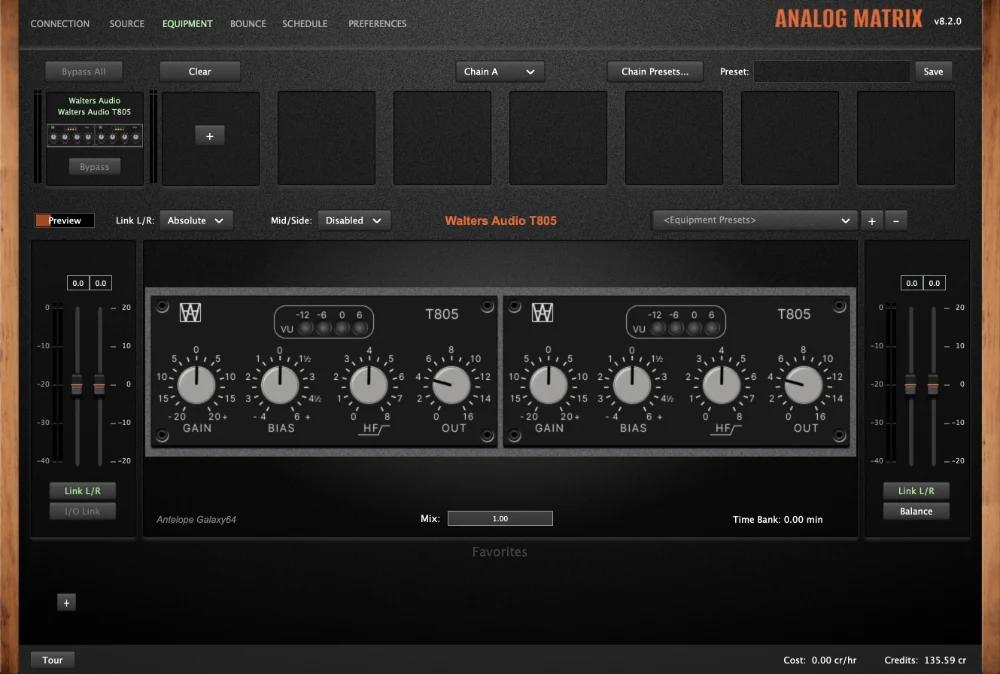
Before we dig into the controls, hear it for yourself. There is no one better than Time Preservation Society to put the T805 through its paces and explain why they fell for these units immediately.
According to Walters Audio, the heart of the T805 is the Tape Element™, a proprietary low-permeability ferrite toroid transformer engineered to replicate full-spectrum magnetization with authentic magnetic hysteresis (the way a magnetic material's output depends on its magnetic history, which gives tape its smooth, history-dependent saturation) and dynamic saturation.
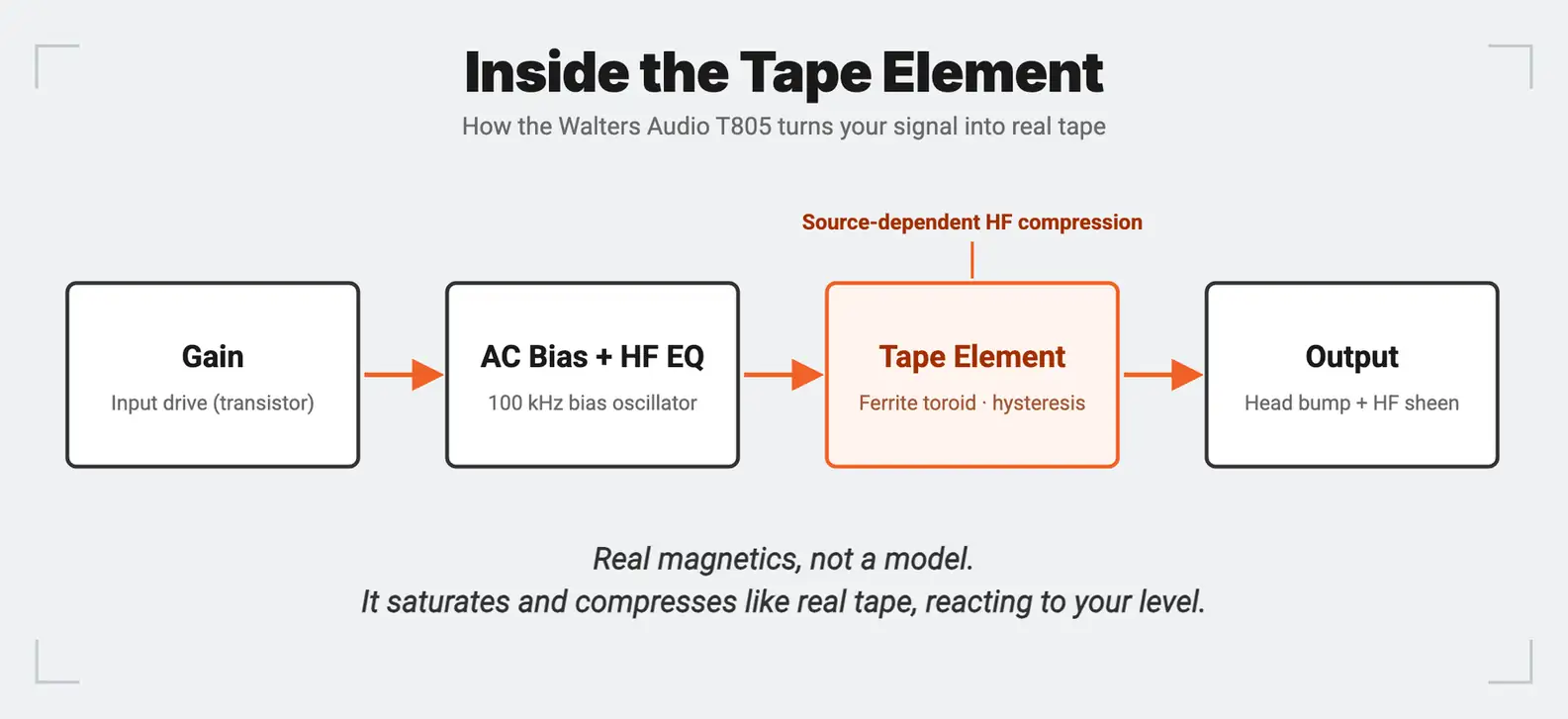
Walters Audio describes the element as driven by discrete transistor circuitry, a dedicated bias oscillator, and a high-frequency EQ that mirrors real AC-biased tape recording. AC bias is the high-frequency signal (here a 100 kHz tone) that classic machines mix in to linearize the recording. Because all of this is physical, the unit reacts organically to your signal in real time.
This is not simulated warmth. It is source-dependent high-frequency compression that naturally rounds off transients and tames harshness exactly like classic tape, giving you the silky top-end sheen and punchy low-end weight that plugins approximate but rarely nail. Plugins keep getting better. What they still struggle with is a real magnetic element behaving non-linearly, moment to moment, the way physical tape does.
Real hysteresis in a physical element is the difference between a convincing tape sound and the actual thing.
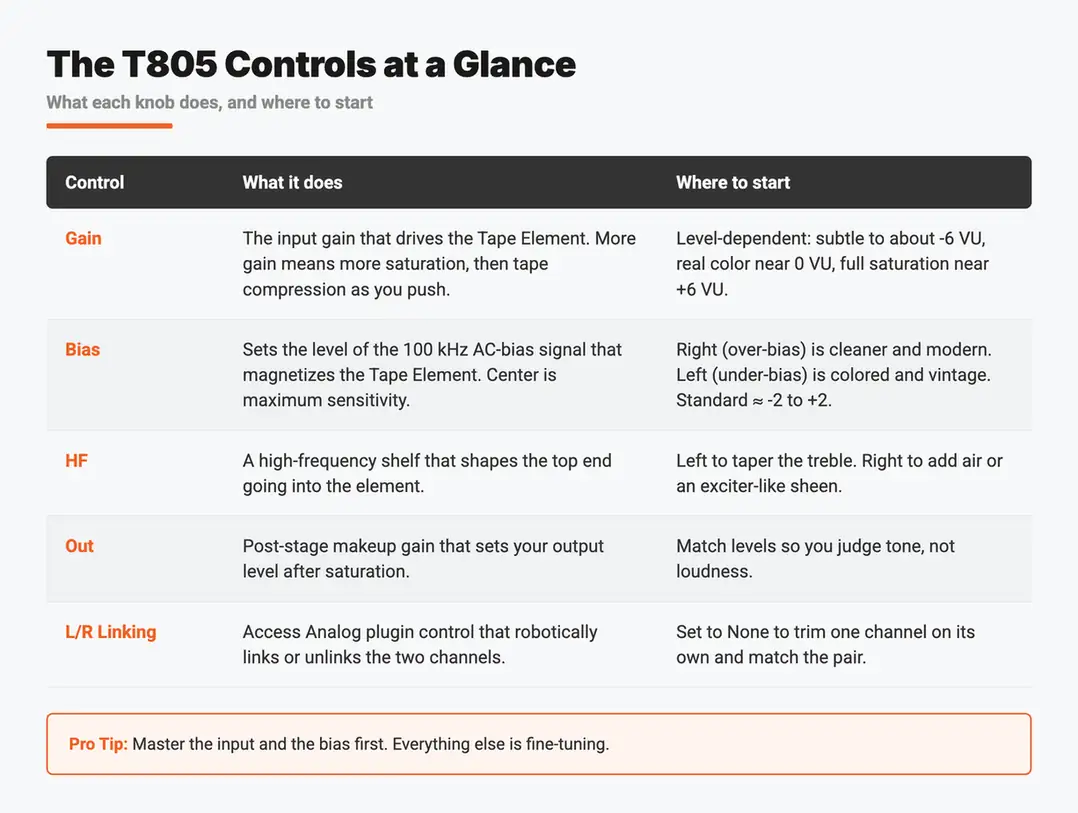
A few knobs do most of the work. Here is what each one does, drawn from the Walters Audio documentation and Karl's testing.
The following is from Karl Barnes, the mixing and mastering engineer and Access Analog partner who tests gear for the platform, in his own words.
Hey Karl here, as an avid tape enjoyer (most of my mixes are pressed on studers or telefunkens) I have been very excited for the launch of the T805 and now have been using it for quite some time on every mix. I think it is an absolute magic bullet when looking for any kind of saturation mojo in your music.
The effects of the T805 are heavily influenced by your input gain into the box. Something that I like to do first is leave the settings at default and just play with the input and use the automatic L/R balancer on the AA output to make sure the sound is even.
With just the first light flickering you will be getting a nice saturation and subtle lift to your audio. Further input gain will increase the saturation much further and also introduce a beautiful tape compression (think of it like the smoothest and most unique/simple multiband compressor you have heard). Feel free to also overload those LEDS a bit to chop off some peaks, smoothen out dynamics and get a stronger blooming character across your recording. Pinning the meters was common enough in the old tape days as the medium is inherently noisy, pushing into the red was largely to reduce as much noise as possible but it also had a special upfront sound that we associate with a lot of 60's and 70's records. More importantly, it's fun, try it.
From here I would then start to play with the Bias knob, essentially a magic knob created by Spencer (the creator) that to my ears seems to introduce some parallel processing of the high frequencies in the output and affects the signal to noise ratio yada yada yada..dont quote me on that. I find that pushed to the right of centre sounds a lot more modern (80's/90s's) and to the left of centre sounds more vintage (60's and 70's). Listen out to see how your audio is BREATHING as the stereo field on complex material will change quite a bit, this to me is the second most important knob to tweak after your input levels as the compression character and overall tonality will change for the better here. Go back and forth between adjusting input gain/output gain and the bias knob to get the most out of the t805. Lastly fine tune the sound with the HF shelf, more to the left if you really want to taper the treble (it sounds gorgeous) or push more to the right and make up for any treble loss if you want things to be more modern, often I will push the HF shelf to the maximum increase for a really cool exciter sound on a modern vocal production. It shouldn't work but it does, which is a running theme for how I approach this unit.
Now if you were to simply keep the device at default settings and only play with the input and output gains, that would absolutely be a fine idea. The tape saturation effect that you probably normally reach for in plugin form will work right off the bat and with only small gain tweaks needed, sound much more impressive and get the job done faster.
But we could have a lot more fun here so I have made a couple of presets below that show off some unique sounds from the T805, these of course are very level dependent so make sure you always play with the input and output (i know I KEEP SAYING it). I hope it sparks some fun ideas and tweaks in your productions.
Karl built 16 starting points across every bus, from subtle glue to fully pushed saturation. Remember his one rule: the T805 reacts to level, so always set the result with the input and output gain. Presets tagged Drive Me are built to be pushed. Turn the gain up until the saturation and tape compression bloom.
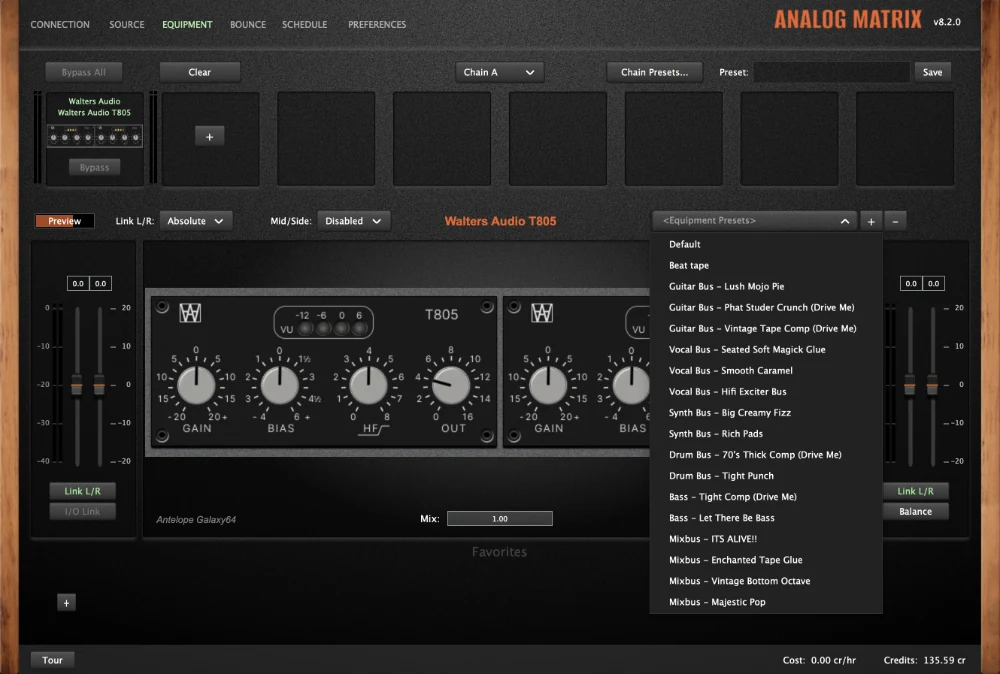
70's Thick CompDrive Me
Push those dials, sit back and enjoy those soft clipped transients. Kit is tighter with a huge focused and coloured sound. Dial back the HF to taste. Classic pushed Studer vibe. Classy and big.
Tight Punch
My go to 1st pass post eq/compression on a modern electronic or general acoustic drum bus, super tight, balances out the sound and gives a lot of movement to the groove. Stereo field is more alive and organic, everything sits up straight but snugs better into the mix. I aim for -6db on the meters for a smoother compression. For a more vintage flavor, dial the Bias back to 1 on the left side.
Smooth Caramel
Lather your vocal in smooth creamy tape caramel. More weight, focus yet depth and trimmed of anything spikey or harsh. Great on rock and jazzy hip hop/R&B. Play with that Input gain and HF to taste.
Seated Soft Magick Glue
Basically the default setting with a little of that HF boost to compensate. Fluttery and beautiful, glue a vocal bus in the mix post EQ and compression. Push harder to make the vocal stand out more as a feature.
Hifi Exciter Bus
When your vocal just isn't hitting, try this! Works great on pop or anything where a glossy forward vocal is king. Maximum character and a cool tweaked up Hifi sound.
Phat Studer CrunchDrive Me
Does what it says on the tin, phatter and deeper guitars with a lovely moving 3D stereofield. Great for the final polish on a guitar bus, push for more balls and saturation. Incredible on acoustics.
Vintage Tape CompDrive Me
Instead of compressing your guitar bus, likely on top of individual guitar compression..try this. The more you push the input the more compression you get, as easy as it gets. I love to use this to glue gats into the mix without any traditional trade offs you get with a standard compressor like a more processed sound. Tighter, much fatter and gooey in a natural pleasing way. The sound stretches the outside of the speakers in a fluttery way and sounds effortlessly bigger. Beautiful vintage Studer vibe here! Smokes the plugins in my opinion which sound like they are trying too hard, you should A/B them.
Lush Mojo Pie
Lusher, deeper guitars with a nice HF boost suitable for modern productions/anything that needs gats to pop. Sounds subtle at 1st but so tasty you won't want to turn it off. Pretty sounding, pairs nicely with the massive passive (softer) or Curve Bender (harder)
Tight CompDrive Me
Focused with enhanced detailed, lovely bass texture. IMO real tape is king for bass and this delivers. Quite nice to push harder after an 1176 and its worth trying eq before or after. I often push a little 700hz and sub or upper bass into it for a bolder bass. If your doing vintage rock try the neve channel strips with it, oh and drive the piss out of them too, show those youtube mixing celebs whose boss.
Let There Be Bass
If you are looking to add saturation to help cut through lesser made speakers then this is a good place to visit. Push harder and run in parallel if that's your thing, I like to go full on wet with smidge of the Analog Designs Black Box or Overdriven Culture Vulture in parallel. Yes il have my cake and eat it
Big Creamy Fizz
My favourite way to glue keys together in a mix, big and textured with a nice pop. Everything feels more recorded in the same room, lovely harmonics. Bring the HF forward for modern pop and backwards for anything more vintage.
Rich Pads
Im sorry to tell you this but..your pads are just not rich enough (unlike mine) Try not to dime the meters into Inferno if you want less compression but.. you should dime the meters ya dummy. Or not.. If you like Boards Of Canada..maybe. I should fish out that manual…
ITS ALIVE!!
Unveil that mix bad boy, hit -6db on the led meters and call it a day bad boy.
Enchanted Tape Glue
Glue things tape style! A little goes a long way, tame back the HF knob if needed. Sounds subtle but more pleasing on the ears…some goblin trickery at play here.
Vintage Bottom Octave
If you wanted a vintage vibe across the whole production but you somehow fucked up and made it harsher and over processed then this is a good preset for you. Simmer down..take the edge off..I like to use this on mixes that need to sound Raw!
Majestic Pop
My 1st pass on anything POP. Smooshes things together majestically for a tight, polished and louder sound. Vocal should pop out nicely and the mix should have a little Hifi flavour, it deserves it…needs it! Push closer to 0 to clip some peaks and help your limiter get to -2 LUFS and give the good people what they want goddamn!
Want to build your own sounds? Start with the bias setting. Over-bias (to the right) tends to sound good on everything. Nominal and under-bias (center and left) are a bit more colored and resemble what you would find from the 50s to the 70s.
As you experiment with the bias, you may notice an imbalance between the channels. There is no way to exactly match the unique tape elements on each unit, the same way no two real machines are identical. If you hit an imbalance, set the robotic L/R Linking on the plugin to None, then adjust just one of the channels to better match the other.
And once you have dialed in your own version of the 70s, save it. On Access Analog the T805's settings store with your DAW session, so your custom preset recalls perfectly the next time you open the project.
The best preset is the one you build for your own material. Start from Karl's, then make it yours.
Well… that's my rundown on a few flavors you can get from this fantastic sounding box by Walters Audio. I hope it piqued your interest to dive in yourself and make better presets for yourself, send em my way.
Thanks!!!
Karl
That is the beauty of running the T805 on Access Analog. Every one of Karl's presets is the real box, recalled to the exact settings, ready the moment you open the plugin. No tape to source, no machine to align, no calibration drift. Just load a starting point, push the gain, and listen to your mix start breathing. If you want an actual tape transport in the chain, a real Telefunken M15 is on the rack too.
Real tape, real magnetics, one click away. Drop the T805 on your next bus and hear what a plugin can only approximate.
These presets come from Karl Barnes, an analog-obsessed mixing and mastering engineer and owner of Loom Sound Studio in Edinburgh, Scotland. We want to recognize Karl, a partner of Access Analog, for his help with testing and feedback.
A fanatic audiophile, Karl has worked in the field for the last ten years wearing many hats as a producer, composer, mastering engineer, and sound designer. He prefers to ditch cold digital processors in favor of old-school analog mixing and mastering tools, and his productions are full of character and vibe.
Karl also sat down with us for a Q&A a while back. Read it here: Q&A Session with Karl Barnes of Loom Sound Studio. Follow him on Instagram at @karlbarnes303.
What is the Walters Audio T805?
The Walters Audio T805 is a 500-series analog tape-saturation unit that recreates the sound of recording to tape using a real magnetic element, its patent-pending Tape Element, rather than a digital model. It applies harmonic saturation, gentle tape-style compression, and a low-frequency head bump inspired by an 80s tape machine. Through Access Analog you can run the physical T805 remotely from inside your DAW.
What does tape saturation do in a mix?
Tape saturation adds harmonic content, softens transients, and applies a light, program-dependent compression that makes separate tracks feel like one cohesive record. Engineers call that cohesion "glue." On the T805 this happens in real analog circuitry, so it responds to your signal level moment to moment instead of applying a fixed curve.
How does the T805's Bias control work?
Bias sets the level of the unit's 100 kHz AC-bias signal, which determines how the Tape Element is magnetized, with the center position calibrated for maximum sensitivity. Higher (over-bias) settings are cleaner and more modern. Lower (under-bias) settings add more color and a vintage character. Standard tape-machine behavior lives roughly between -2 and +2, and pushing well past that produces more extreme, unusual coloration.
What level should I feed the T805?
The T805 is highly level-dependent. Expect roughly subtle enhancement up to about -6 VU, noticeable coloration around 0 VU, and full saturation as you approach +6 VU. Karl Barnes often aims for about -6 dB on the plugin's LED meters for smoother compression, then pushes harder when he wants more bloom. (The LED meters aren't necessarily calibrated to true VU, so trust your ears.) Always set the final result with the input and output gain.
Who created the T805 presets, and what do they cover?
The 16 presets were built by Karl Barnes, a mixing and mastering engineer and Access Analog partner. They span the drum bus, vocal bus, guitar bus, bass, synth bus, and mix bus, from subtle glue to aggressive, pushed saturation. Each is a starting point: because the T805 reacts to level, you fine-tune with the input and output gain.
Is the T805 a plugin or real analog hardware?
The T805 is real analog hardware. Its saturation and compression come from a physical magnetic element and discrete circuitry, not a software model. With Access Analog, the plugin in your DAW robotically controls the actual unit and recalls its exact settings, so a preset restores real knob positions on the real box.
Can I use the T805 without buying one?
Yes. Access Analog gives you remote access to the physical Walters Audio T805, along with 50+ other premium analog units, from inside your DAW, with full recall saved in your session. You can load Karl's presets, hear the real hardware on your own material, and pay only for the gear you use. See the Walters Audio T805 on Access Analog.