Control real analog gear straight from your DAW with the Analog Matrix. The Analog Matrix is not an emulation! It acts as a portal, connecting your digital audio workstation to actual physical gear in real time.
Reserve a session using the calendar below, or jump straight into the Analog Matrix plugin and use equipment on demand as it is available. Note: on-demand access requires credits or an active subscription.
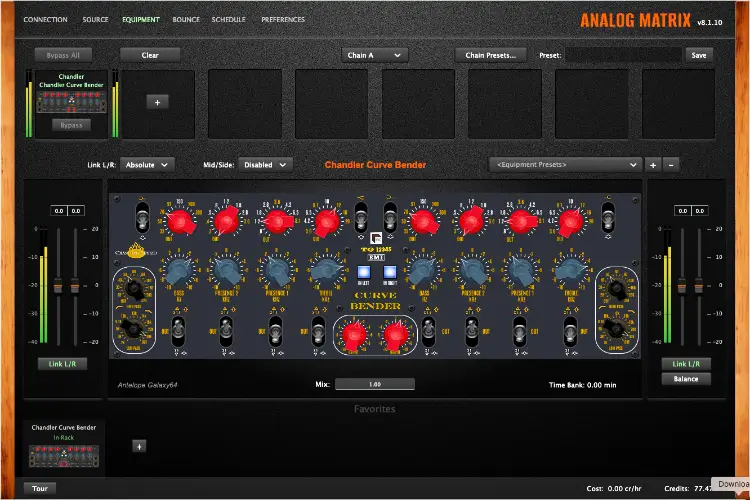
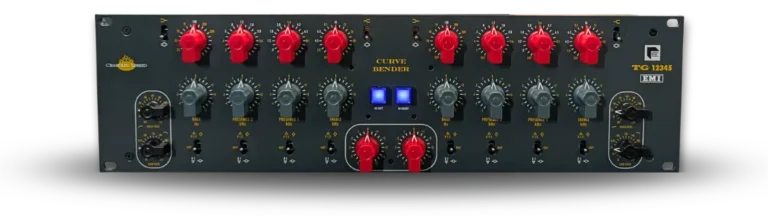
Built from the lineage of the legendary EMI TG12345 console EQ, the Curve Bender takes that classic curve-and-color philosophy and expands it into a mastering-grade, mix-bus-ready powerhouse. Designed by Wade Goeke with input from Abbey Road’s Peter Cobbin, it was conceived as a “fully featured” version of the original desk EQ idea. Ready for today’s workflows while keeping the unmistakable TG attitude!
The magic is in how fast it gets you to “finished.” With 51 EQ points across four bands, you can sculpt lows, open the presence, and add sheen without turning your mix brittle. Hit the Multiply switch when you want bigger moves – boost/cut expands (and the curve tightens) so you can go from gentle polish to assertive tone-shaping in seconds. Add the built-in high-pass/low-pass filters to clean edges and lock the spectrum before compression or limiting.
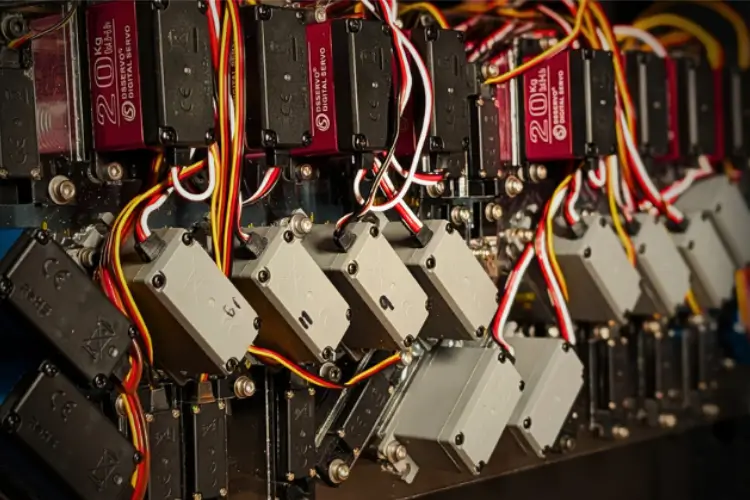
And because this is Access Analog’s world: you’re not “getting the vibe of” a Curve Bender. You’re running audio through real hardware, controlled from your DAW with robotic recall/presets and pro-grade streaming conversion. Real gear. No emulations.
Visit the Curve Bender website for more information.
What is the Chandler Curve Bender?
The Chandler Limited Curve Bender is a stereo, mastering-grade analog EQ based on the legendary EMI TG12345 console EQ used at Abbey Road on Beatles and Pink Floyd records. Designed by Wade Goeke with Abbey Road’s Peter Cobbin, it expands that classic desk EQ into a fully featured, mix-bus-ready powerhouse with 51 EQ points across four bands. It is known for a big, smooth top end and an authoritative low end that sounds “finished” fast.
What is the Chandler Curve Bender best for?
The Curve Bender is best for mix-bus and mastering EQ, adding silky top-end sheen, weight, and that “instant record” polish without sounding clinical or brittle. Its broad, musical curves make big tonal moves feel natural, so it is ideal for final-stage tone shaping. Engineers also love it on individual tracks like vocals, bass, and drums when they want analog character and authority.
How many bands does the Curve Bender have, and what controls does it offer?
The Curve Bender is a four-band EQ with 51 selectable frequency points, plus shelf/bell options on the high and low bands and built-in high-pass and low-pass filters. Its controls are stepped for reliable recall and easy A/B comparisons, and each band has a Multiply switch that scales how big its moves can be. That combination covers everything from gentle polish to assertive, record-ready tone shaping.
What does the Multiply switch do?
The Multiply switch increases how much each band can boost or cut and, at the same time, sharpens (narrows) the EQ curve. In its standard setting you get fine, gentle moves in small steps; switched up, the range expands to roughly ±13.5 dB for bigger, more aggressive tone-shaping. It lets you go from subtle polish to assertive moves in seconds without changing your frequency selection.
What’s the difference between a passive EQ and an active EQ?
A passive EQ shapes tone using only passive components (inductors, capacitors, and resistors) with no built-in amplification, then makes up the lost level with a separate gain stage, which tends to sound smooth, musical, and “expensive.” An active EQ uses powered circuitry to boost and cut directly, often allowing more surgical, higher-gain moves. The Curve Bender is a passive design with transformer and tube make-up gain, which is a big part of its rich, finished character.
Can I use the Curve Bender on individual tracks, or just on the mix bus?
You can use it anywhere. It is not limited to the mix bus or mastering. While it is a go-to for final-stage stereo EQ, engineers regularly reach for it on vocals, bass, drums, and other individual tracks to add weight, sheen, and analog authority. Through Access Analog you can run it on whatever you like, a luxury that owning a single expensive unit rarely allows.
Is the Access Analog Chandler Curve Bender real hardware or an emulation?
It is the actual Chandler Limited Curve Bender – a real, hand-wired analog EQ with genuine transformers and inductors, not a software model of it. Through Access Analog, the Analog Matrix plugin robotically controls the physical hardware in real time from inside your DAW, so your audio runs through the real circuit. Real Gear. No Emulations.
Can I recall and automate my Curve Bender settings through Access Analog?
Yes. Every control on the Analog Matrix plugin is robotically linked to the physical hardware, so you can save, recall, and automate your settings inside your DAW session like any other plugin. Because the Curve Bender’s controls are stepped, recall is precise and repeatable – your exact frequency, band, and Multiply settings come back every time, on real analog hardware.
How much does it cost to use the Curve Bender at Access Analog?
The Chandler Curve Bender reserves from $6.92 per hour, a fraction of the cost of owning a unit that runs several thousand dollars. Reserve a session on the calendar or use it on-demand with credits or an active subscription (subscriptions start at $9.98/month), and new accounts get a free hour (about 12 credits) to try real hardware.
Select Features of the Chandler Limited Curve Bender:
Stereo, mastering-grade EQ designed for mix bus and final polish
Four musical EQ bands with broad, record-ready curves
High-pass and low-pass filters for tightening extremes and cleaning edges
Stepped controls for reliable recall and easy A/B comparisons
Shelf and bell shaping options for flexible tone sculpting
“Multiply” style gain scaling for wider moves when you want more impact
Built for big, smooth top-end and solid, authoritative low end without sounding clinical
Reviews of the Chandler Limited Curve Bender:
User Manual for the Curve Bender: