Control real analog gear straight from your DAW with the Analog Matrix. The Analog Matrix is not an emulation! It acts as a portal, connecting your digital audio workstation to actual physical gear in real time.
Reserve a session using the calendar below, or jump straight into the Analog Matrix plugin and use equipment on demand as it is available. Note: on-demand access requires credits or an active subscription.
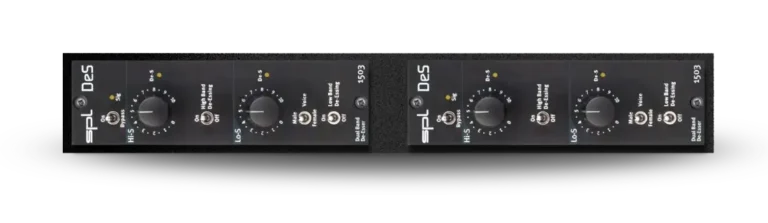
Sibilance has met its match. The SPL DeS is the dual-band, 500 Series version of SPL’s Model 9629 Auto Dynamic De-Esser, a German-engineered sibilance fixer that became a go-to in recording studios, broadcast facilities, and live sound. Developed by SPL’s Wolfgang Neumann and shipping since 2016, the DeS takes that proven approach and splits it into two focused bands, so you can target piercing upper-register hiss and lower, thicker S-sounds separately.
Instead of clamping down on your vocal like a compressor-style de-esser, the DeS uses phase cancellation. It isolates the S-band, flips its phase, and mixes it back in, so only the sibilance cancels out. The result is a natural, open vocal, designed to avoid the lisping and dulled top end that heavy de-essing can cause. Auto-Threshold keeps the reduction consistent even when the singer moves on the mic. It shines on lead vocals, voice-over, podcasts, and spoken word, anywhere a bright mic or a hot performance turns every S into a spike.
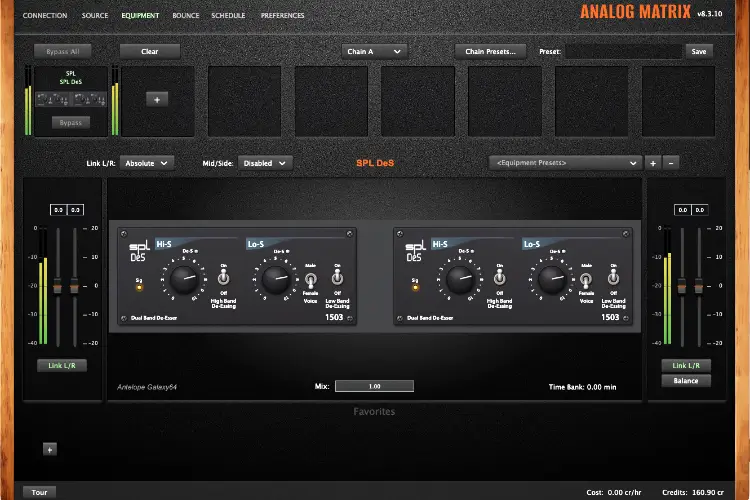
At Access Analog, two DeS modules run side by side as a stereo pair, ready for a mono vocal or a stereo vocal bus. You’re working the actual units, robotically controlled from your DAW through the Analog Matrix. Dial in the Hi-S and Lo-S bands, flip the Voice switch, and hear the hardware clean up your track.
NO HISS! NO LISP! JUST VOICE!
See Our Blog Post – How to Improve Vocal Sound Quality: 10 Tips, From the Room to the Analog Chain
The SPL DeS is a dual-band hardware de-esser that removes harsh sibilance (S, SH, and T sounds) from vocals and dialogue. It detects sibilant energy in two bands, a high band centered at 11.2 kHz and a switchable low band, and reduces each one independently. You set the amount of reduction, and Auto-Threshold handles the rest.
The DeS is built for the human voice: lead and background vocals, voice-over, podcasts, and spoken word. It is especially useful with bright condenser or shotgun mics that exaggerate sibilance. Reviewers have noted how consistent it stays across a wide range of input levels, which makes it easy to drop into a vocal chain.
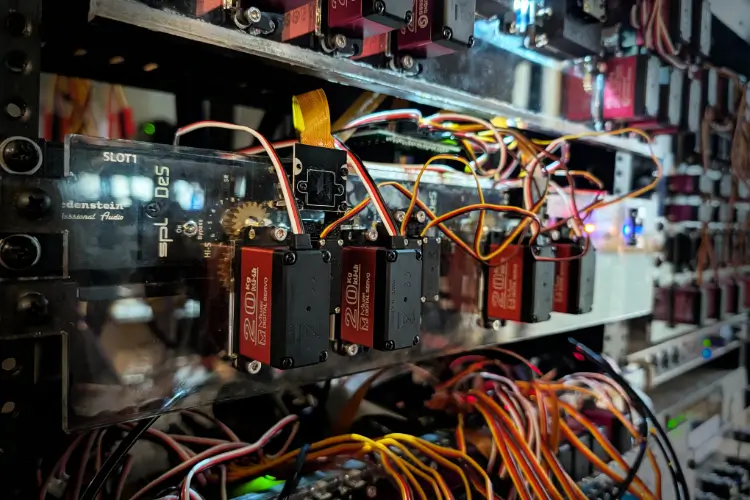
It’s the actual SPL DeS hardware: two real 500 Series modules with real analog circuitry, not a model of them. Your audio streams to the physical units in our rack, and robotics move the real controls as you adjust the Analog Matrix from your DAW. Real Gear. No Emulations.
You can reserve the SPL DeS for a timed session or use it on demand with credits or an active subscription. Current rates for every device are always listed on the Gear Prices page. New accounts get 12 free credits, about an hour on an average device, to try the service.
A phase-cancellation de-esser cancels only the sibilant frequencies instead of turning the signal down. A conventional de-esser works like a fast compressor keyed to high frequencies, reducing level whenever sibilance crosses a threshold. The SPL DeS isolates the S-band, inverts its phase, and mixes it back in, so the S-sounds cancel while the rest of the voice is left alone. SPL designed this approach to avoid the lisping and dulled tone that heavy gain-reduction de-essing can cause.
Choose by ear, not by the singer’s gender. The Voice switch moves the low band’s center frequency to 6.4 kHz (Male) or 7.6 kHz (Female), so the right setting is whichever one lines up with where that voice’s S-sounds actually sit. Try both on the brightest section and keep the one that tames the sibilance with the least change to the voice.
It depends on what the vocal needs, but the standard spot is after any high-boost EQ and before the first compressor. There it tames the S-sounds that added air and presence exaggerate, before a compressor like the LA-2A or Tube-Tech CL 1B reacts to them and pulls down the whole word. Placing it after compression catches sibilance the compressor pushed forward, and very spitty vocals often get a light pass early and a second pass later so neither stage works hard enough to cause a lisp. Either way, de-ess before saturation or a limiter, since they multiply harsh S-sounds and eat up headroom.
Each SPL DeS is a mono, single-slot 500 Series module, and Access Analog runs two of them as a dual-mono stereo pair. You can de-ess a mono vocal or process stereo material like doubled vocals or a vocal bus. Turn on Link L/R in the Analog Matrix and the robotics set both units together, so the left and right sides match.
The DeS is voiced for vocals, and that’s where it shines. Its bands are fixed on the sibilance range (a 6.4 or 7.6 kHz low band and an 11.2 kHz high band), with no frequency controls to retune it for other sources. It can still help with splashy hi-hats or harsh overheads that live in the same range, so it’s worth a try, but expect the best results on voice.
No. The DeS is a line-level processor, so it can’t take a microphone directly without a preamp in front of it. At Access Analog, you send recorded audio from your DAW through it and get the processed audio back in your session, which makes it ideal for cleaning up vocals, voice-over, and podcast dialogue after tracking.What does the SPL DeS do?
Hi-S and Lo-S set the intensity of the reduction, not a threshold. Auto-Threshold handles the threshold for you and follows changes in input level, so start with both controls low and bring them up until the S-sounds sit back in the vocal.
Use the lights and switches to listen. Each band has its own SR LED that lights when that band is reducing sibilance. Use the High Band and Low Band On/Off switches to hear what each band contributes, and the On/Bypass switch for a quick before-and-after.
Link the pair for stereo sources. The two DeS modules run as a dual-mono pair. Set Link L/R in the Analog Matrix to Absolute and the robotics turn both units to the same settings while you adjust only the left controls. Use Relative to move both together while keeping any offset between them, or None to set each side independently with the Left/Right selector.
Listen for over-processing. Too much reduction can make a voice sound dull or lispy. If you can clearly hear the de-esser working, back the controls off.