Control real analog gear straight from your DAW with the Analog Matrix. The Analog Matrix is not an emulation! It acts as a portal, connecting your digital audio workstation to actual physical gear in real time.
Reserve a session using the calendar below, or jump straight into the Analog Matrix plugin and use equipment on demand as it is available. Note: on-demand access requires credits or an active subscription.
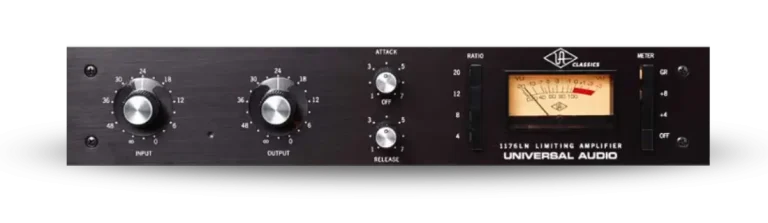
The Universal Audio 1176 is a classic, vintage-style compressor that is highly sought after by professional audio engineers. With its lightning-fast attack time, smooth gain reduction, and versatile range of compression ratios, it is one of the most popular analog devices in the industry.
For 50 years the 1176 has been a vital tool in music production revered for its fast compression/release and warm tone that only FET circuitry can offer. Typically not utilized to be transparent, the 1176 imparts its signature sound giving sources a hefty dose of vibe and character. The amplifiers and transformers in the 1176 offer exactly what engineers love about analog tone. You can even push these into a pleasing distortion that is instantly recognizable.
It doesn’t get more classic than the UA 1176!
New to the 1176? Read The 1176: Why a FET Limiter Built in 1967 Is Still on Every Professional Vocal: how the FET circuit works, what all-buttons-in really does, and which sources it suits best. Choosing between compressors? See 1176 vs. LA-2A on Vocals.
Weighing it against a Distressor? Read Distressor vs 1176: Can the Distressor Really Do the 1176 Thing?
What does the Universal Audio 1176 do?
The Universal Audio 1176 is a FET compressor/limiter that controls a track’s dynamics while adding its own punch and character. First released in 1967, it’s prized for lightning-fast attack times that no optical or tube compressor can match. Push it harder and its Class A amplifier and transformers add a pleasing, instantly recognizable saturation. It’s the definition of a ‘colored’ compressor – you use it because you want to hear it working.
What is the 1176 best for?
The 1176 is the go-to for anything that needs energy, punch, and presence – lead vocals, snare and room mics, bass, and drum bus. Its fast FET response snaps transients into focus and pushes a source forward in a mix. It’s a favorite on vocals for adding forward attitude and consistency. It’s less suited to invisible, transparent leveling. Reach for it when you want the compressor to add attitude, not hide.
Is this the real 1176 hardware, or an emulation?
It’s the actual 1176 hardware, real FET circuitry, real transformers, and a real Class A output stage, not a model of them. Real Gear. No Emulations. Access Analog connects your DAW to the physical unit in real time through the Analog Matrix plugin, so your audio passes through the genuine analog circuit and comes back to your session.
How much does it cost to use the 1176 at Access Analog?
The 1176 reserves from $4.03 per session at Access Analog, and you can also use it on demand with credits or an active subscription. New accounts get a free hour to try the gear (about 12 credits, roughly one hour on an average device). Credits never expire, and you only pay for the time the device is actually inserted.
What is “All-Buttons Mode” on the 1176?
All-Buttons Mode is the famous trick of pressing all four ratio buttons in at once, producing an aggressive, harmonically rich, overdriven compression sound. It’s also called “British Mode.” Because the 1176 is program-dependent, engaging every ratio shifts the bias points throughout the circuit, changing the attack and release into a distinctive overdriven curve. Engineers love it on drums, room mics, and aggressive vocals. It won’t harm the unit. Note: At Access Analog, all-buttons-in is available on the 2-1176 through its labeled ALL ratio position.
What settings should I start with on the 1176 for vocals?
A common vocal starting point is a 4:1 ratio with the Input driven for roughly 3–7 dB of gain reduction on the loudest peaks. Remember the 1176 has no threshold knob, you set how much it compresses with the Input control. Attack and release are reversed (fully left is slowest, fully right is fastest), so experiment with letting a little transient through to keep the vocal punchy. These are starting points; trust your ears in the mix.
What’s the difference between the 1176 and the LA-2A?
The 1176 is a fast, aggressive FET compressor, while the LA-2A is a slow, smooth optical compressor. They shape dynamics in opposite ways. The 1176 grabs transients almost instantly and adds excitement and grit; the optical LA-2A levels gently and program-dependently for a more transparent feel. Many engineers use both in series, hitting peaks with the 1176 first and smoothing the overall level with the LA-2A after.
Can I track a live mic through the 1176, or is it for processing my DAW audio?
At Access Analog the 1176 processes audio already in your DAW – you route a track out to the real hardware and back, rather than tracking a live microphone into it. You can use it on individual tracks or buses just like an insert, and every knob, switch, and ratio button is saved so you can recall the exact setting or whole signal chain later.
Sound on Sound
https://www.soundonsound.com/reviews/universal-appeal
Record Production
https://www.recordproduction.com/reviews/universal-audio-1176ln