Control real analog gear straight from your DAW with the Analog Matrix. The Analog Matrix is not an emulation! It acts as a portal, connecting your digital audio workstation to actual physical gear in real time.
Reserve a session using the calendar below, or jump straight into the Analog Matrix plugin and use equipment on demand as it is available. Note: on-demand access requires credits or an active subscription.
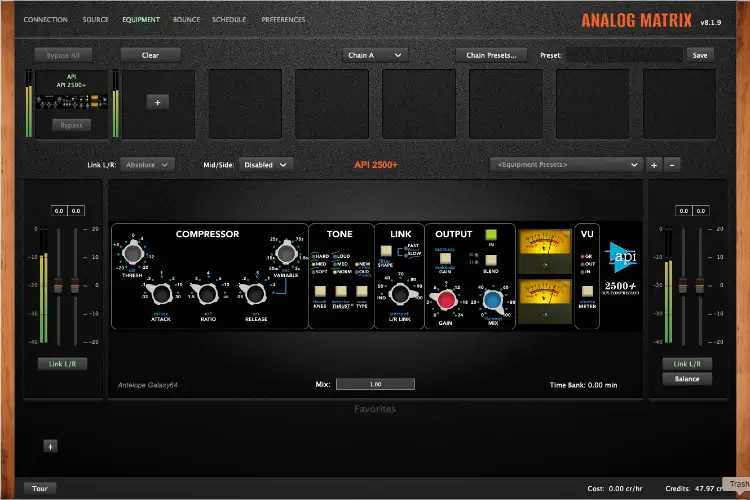
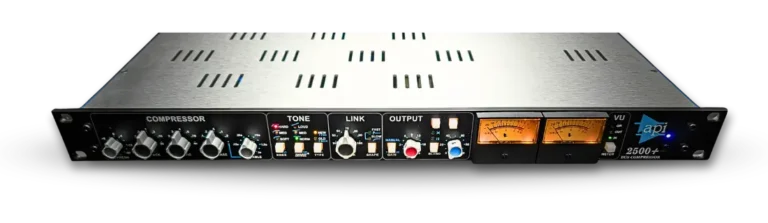
The API 2500+ Stereo Bus Compressor isn’t just another dynamics processor – it’s the Swiss Army knife of bus compression. Whether you’re gluing a drum bus together, adding weight to your mix bus, or sculpting aggressive parallel compression, the API 2500+ delivers the iconic API sound that’s been trusted on platinum records for decades. With its patented THRUST® circuit, you can dial in chest-hitting low end that cuts through any mix without sacrificing clarity. This isn’t subtle. This is the compressor that makes heads turn.
What sets the 2500+ apart from every other bus compressor is its extraordinary flexibility. Choose between “Old” feedback-style compression (think classic API 525 smoothness) or “New” feed-forward mode for raw, in-your-face aggression. The variable knee control lets you transition from transparent glue to dramatic pumping with a single switch. And with the new Mix/Blend circuit – borrowed from API’s limited 50th Anniversary Edition – you can crossfade between compressed and uncompressed signals or blend them in parallel for ultimate dynamic control.
The API 2500+ also features a unique stereo link section with six discrete linking percentages and frequency-selective shape controls, letting you compress left and right channels independently or fully linked, with smart filtering to prevent unwanted stereo image shifts. Combine all this with auto-makeup gain, dual VU meters, and API’s legendary transformer-coupled output stage, and you’ve got a world-class bus compressor that handles everything from feathery-light mix glue to window-breaking drum destruction.
Real analog. Real punch. Real results.
Choosing a bus compressor? Read SSL G Bus vs API 2500: Glue or Punch? Which Bus Compressor Finishes Your Mix: why the 2500+ punches, how to set Thrust and Old/New, and when to run it with the SSL G.
What is the API 2500+ and what does it do?
The API 2500+ is a stereo VCA bus compressor built to add punch, glue, and weight to mixes, drum buses, and full masters. It controls dynamics while shaping tone, driven by API’s discrete 2520 op-amps and a transformer-coupled output stage. Switchable compression modes, a variable knee, and the patented THRUST circuit let it range from feathery mix glue to window-breaking drum slam. It’s the API sound heard on countless platinum records.
What is the API 2500+ best for?
The API 2500+ is best known as a drum bus and mix bus compressor, where it adds punch and snap without sacrificing clarity. Engineers reach for it to glue a mix together, slam a drum room, or build aggressive parallel compression. It also shines in mastering when a mix needs energy, movement, and that unmistakable API character. In short, it’s for anywhere you want bigger, punchier, and more “like a record.”
Is the API 2500+ at Access Analog the real hardware, or an emulation?
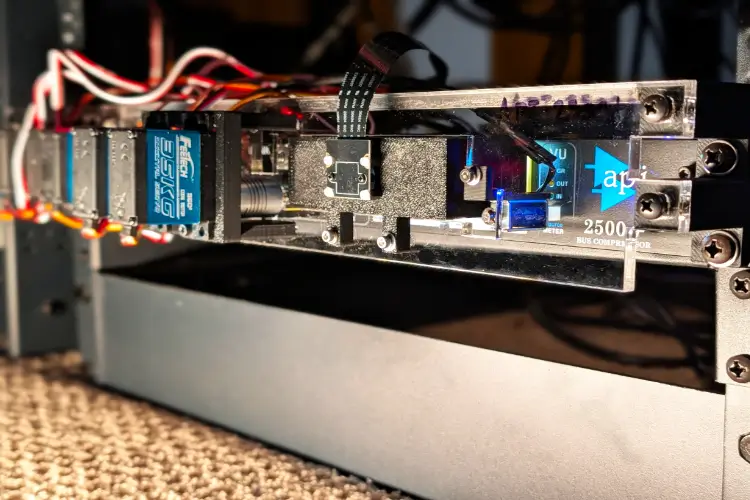
It’s the real API 2500+ hardware, the actual unit, with real VCAs, transformers, and discrete circuitry, not a model of them. Real Gear. No Emulations. The Analog Matrix plugin is a portal that robotically controls the physical compressor in real time from your DAW. Your audio passes through the genuine analog signal path and returns fully processed.
How much does it cost to use the API 2500+ at Access Analog?
Access to the API 2500+ starts at Reserve From: $4.61. You can reserve a session on the calendar, or use it on demand with credits or an active subscription. New accounts get one free hour of access – about 12 credits, roughly an hour on an average device – to try it before committing. No purchase, no maintenance, and no five-figure rack required.
What does the THRUST circuit do on the API 2500+?
THRUST is API’s patented sidechain filter that keeps low frequencies from over-triggering the compressor, so the low end stays tight and punchy. It reshapes the detector signal toward equal energy per octave (the inverse of the pink-noise curve), so bass no longer dominates the compression. The result is more apparent punch and far less pumping. NORM is subtle, MED sits in between, and LOUD is the most aggressive, transient-forward setting.
What is the difference between the “Old” and “New” compression modes?
The API 2500+’s “Old” mode uses feedback compression for a smoother, rounder, more vintage tone, while “New” mode uses feed-forward compression for faster, more aggressive transient control. In Old mode the detector sits after the VCA (like the classic API 525), which is the usual pick for glue on the mix bus and in mastering. New mode reacts almost like a limiter, ideal for slamming drums or modern, in-your-face mixes. One unit, two distinct compression characters.
How is the API 2500+ different from the SSL bus compressor?
The API 2500+ and the SSL bus compressor are both VCA stereo bus compressors, but the API offers far more tone-shaping flexibility. The SSL is famous for fast, set-and-forget glue, while the 2500+ adds switchable feedback/feed-forward modes, a variable knee, the THRUST sidechain filter, and frequency-selective stereo linking. The API tends to sound punchier and more forward; the SSL tends to be tighter and more transparent. Both are available as real hardware at Access Analog, so you can audition the difference for yourself.
What are good starting settings for the API 2500+ on a drum bus?
A solid drum-bus starting point is a 4:1 ratio, “New” feed-forward mode, LOUD THRUST, and a medium or hard knee for punch. Set the release so it breathes with the tempo, and dial the threshold for a few dB of gain reduction on the loudest hits. For glue rather than slam, switch to “Old” feedback mode and ease off the ratio. Use the Mix/Blend control to add instant parallel compression.
What is VCA compression?
VCA compression uses a voltage-controlled amplifier to reduce gain, which makes it fast, precise, and punchy. It’s the technology behind classic bus compressors like the API 2500+, prized for clean transient control and tight, snappy dynamics. Unlike slower optical compressors, VCA designs can clamp quickly and release fast, which is why they excel at gluing drums and full mixes. The 2500+ layers API’s transformers and op-amps on top for extra tone and color.
Can I save and recall my API 2500+ settings at Access Analog?
Yes. Your API 2500+ settings save with your DAW session and recall instantly, just like a plugin. Because every knob and switch is robotically controlled through the Analog Matrix, the physical compressor returns to your exact positions when you reopen the project. That solves the classic analog recall problem, so revisions stay painless.
Select Features of the API 2500+:
Reviews of the API 2500+:
User Manual for the API 2500+: https://www.apiaudio.com/docs/manuals/2500+_user_23-01-09.pdf